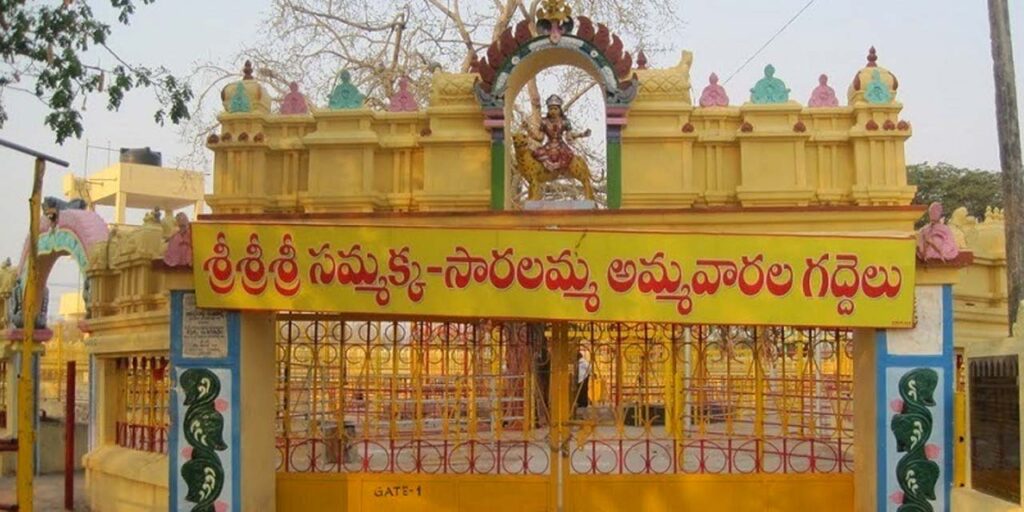
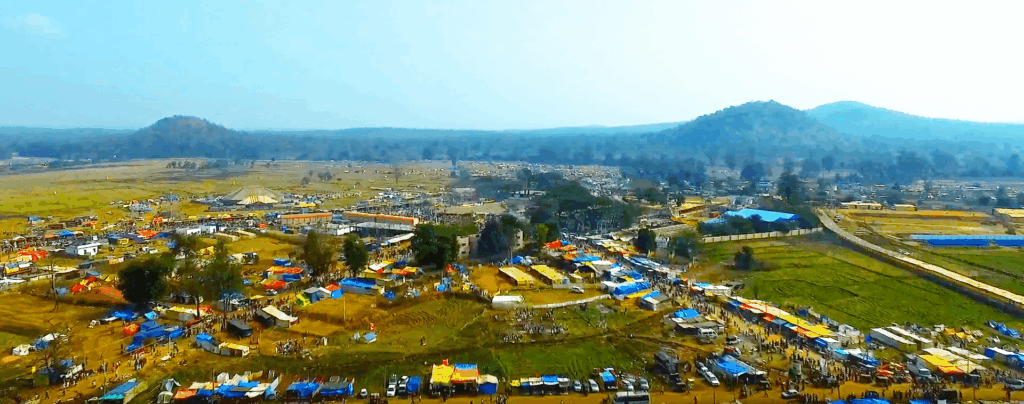
The Sammakka–Saralamma Jathara, popularly known as the Medaram Jathara, is recognized as Asia’s largest tribal religious congregation. Deeply rooted in ancient tribal customs and spiritual traditions, this sacred biennial festival is celebrated at Medaram Village, Tadvai Mandal, nestled within the dense forests of the Eturnagaram Reserve Forest, Mulugu District, Telangana.
Declared a State Festival in 1998, the Medaram Jathara has evolved from a humble tribal observance into one of the world’s most remarkable spiritual pilgrimages. During the Jathara, the otherwise quiet forest hamlet—home to fewer than 300 residents transforms into a vast spiritual landscape, drawing over 1.5 to 1.75 crore devotees from Telangana, Andhra Pradesh, Odisha, Maharashtra, Madhya Pradesh, and other neighbouring states, all united in devotion to Sammakka and Saralamma Ammavaru.
Sammakka Saralamma Temple History
There are many legends about the miraculous powers of Sammakka. According to a 13th-century tribal legend, some tribal leaders on a hunt found a newborn girl (Sammakka) enveloped in light playing amidst tigers. They took her to the tribal chief, who adopted and raised her as a leader. She later became the saviour of the tribals of the region. She was married to Pagididda Raju, the tribal chief of the Koyas. Medaram was ruled by the Kakatiyas (with their headquarters in Warangal city between 1000 AD and 1323 AD).
Sammakka had two daughters and one son, Sarakka alias Saralamma, Nagulamma, and Jampanna. King Prataprudra of the Kakatiyas imposed taxes on the Koya Tribe, which they could not pay. As a result, King Prataprudra declared war on the Koya Tribe. Pagididda Raju was killed in the ensuing battle forcing the grief-stricken Sammakka to pick up the fight with her daughter Saralamma, her son Jampanna, and her son-in-law Govinda Raju. Sammakka had almost won when Saralamma died in the battle. Jampanna was mortally wounded and fell bleeding into Sampangi vaagu (stream). Legend has it that the stream turned red from the blood, and the stream was renamed “Jampanna Vaagu” in honour of Jampanna’s sacrifice. Distraught, Sammakka retired to a hill called Chilakala Gutta and turned into a (kumkuma bharani) jar filled with kumkuma powder. After the battle, Sammakka and Saralamma were deified and a festival was organized in her honour once every 2 years. To this day, the Koya tribe and devotees believe that Sammakka and Saralamma are manifestations of Adi Parashakti sent to protect them.
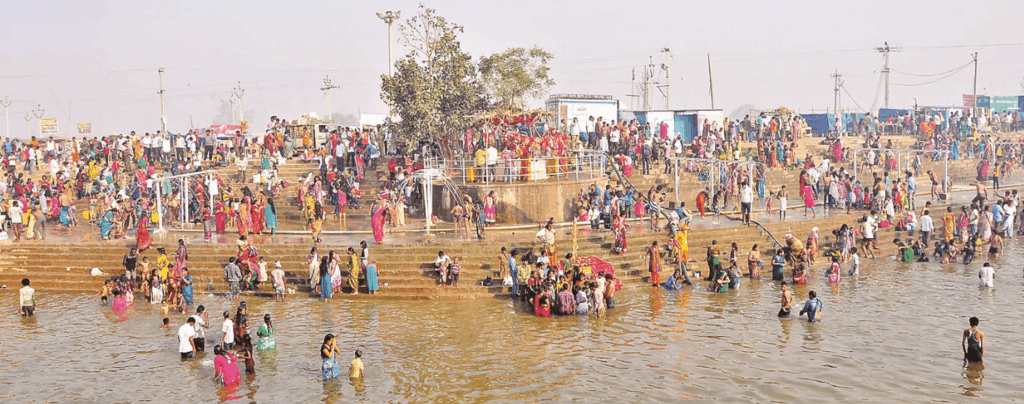
The jatara is a celebration to honour this sacrifice. The Kumkuma jar is brought to Medaram and people wash themselves in Jampanna Vaagu, followed by an offering of (Jaggery) to Sammakka and Saralamma.
Jampanna Vaagu
Jampanna vagu is a tributary to River Godavari. According to the history, Jampanna is the tribal warrior and the son of Tribal Goddess Sammakka. The Jampanna vagu took his name as he died in a battle fighting against Kakatiyan Army in that stream .The Jampanna vagu is still red in colour marked with the blood of Jampanna (Scientifically the red colour of the water is attributed to the soil composition). Tribal’s believe that taking a holy dip in the red water of Jampanna Vagu reminds them the sacrifice of their gods who save them and also induces courage into their souls. There is a bridge constructed on top of Jampanna Vagu, known as Jampanna Vagu bridge.